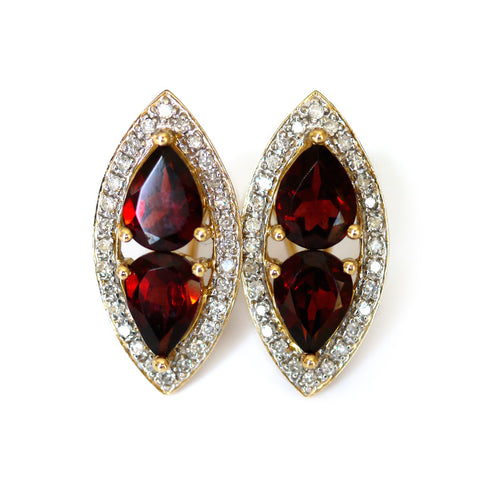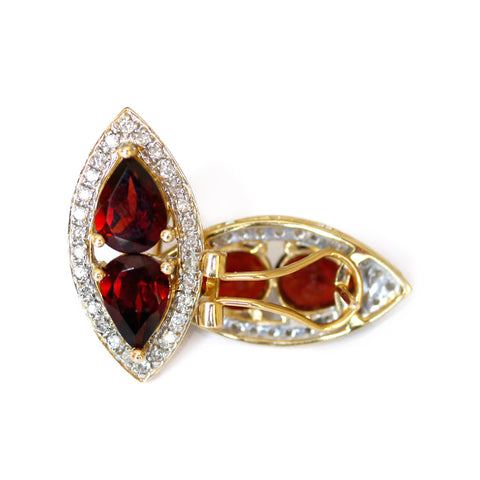
JANUARY: GARNET
Written by Baroque Rocks
January Birthstone: Garnet
January’s birthstone, the glittering Garnet, was a firm favourite of Queen Victoria and remains one of history’s most enduring gemstones! Rather wonderfully, Garnets are not a single gemstone but an entire geological species, appearing in a magnificent spectrum of colours — from deep crimson and regal purple to vibrant pink, orange, green and golden yellow — ensuring there is a Garnet to suit even the most sartorially savvy fashionista. Bestowing protection, vitality and steadfast devotion, Garnet has travelled through history in the company of adventurers, collectors and crowned heads alike — admired not only for its symbolism, but for its richly smouldering allure that never goes out of vogue!
Healing Properties:
The glittering gorgeousness that is Garnet is full of restorative and renaissance qualities! The Garnet is known for its ability to heal and purify, ridding yourself of the toxins from an overtly indulgent festive period!! Garnets reputedly restore your body to a re-energized and revitalized state – ready to conquer the world!! At the time of research, the humble Garnet is also said to have the ability to unleash your boudoir prowess – big up to the glittering Garnet! Proof this gemstone has rather more to it than meets the eye!
Potted History & Magical Myths:
Garnet’s story stretches back thousands of years and reads rather like a grand historical tour. In ancient Egypt, ravishing red garnet necklaces adorned the necks of pharaohs and were entombed alongside them, destined to accompany their owners into the afterlife as treasured symbols of power and protection.
The Romans, far more practical yet fond of sparkling splendour, carved garnets into signet rings, pressing them into warm wax to seal important documents — a gemstone serving quite literally as a mark of authority and trust.
The ancients referred to red garnets as carbuncles, believed to possess almost mystical radiance, and thought by some to be among the sacred gemstones bestowed upon King Solomon himself. By the time of the Roman scholar Pliny the Elder (23–79 AD), Garnets were already globetrotting across trade routes, and were very much prized across civilisations for both beauty and symbolism.
During the Middle Ages, Garnets garnered favour with clergy and nobility alike, worn as talismans of protection and status. Their popularity flourished anew around 1500 following the discovery of rich Bohemian Garnet deposits in Central Europe, adding a sparkling spark to the regional jewellery industry – examples that remain highly collectible today.
Description:
| Birthstone: | January |
| Wedding_Anniversary: | 2nd Wedding Anniversary |
| Colour: | Red, orange, yellow, green, purple, pink, brown, black and colourless, with reddish shades being most common. |
| Origin: | Africa, Russia, Brazil, Bolivia |
| Mineral Family: | Neosilicate |
| Chemical_Formula: |
X3Y2(SiO4)3 |
| MOHS: | Hardness Scale 6.5 - 7.5 |
Click Here To Explore the Complete Monthly Birthstone Guide.
-
Sort by